
Most clinicians step into this field to improve lives, not to chase authorizations, correct claims, or decode payer rules. Yet billing quietly shapes care quality every single day. When systems fail, services slow down. When billing works well, clinicians get back time, and clients get consistency.
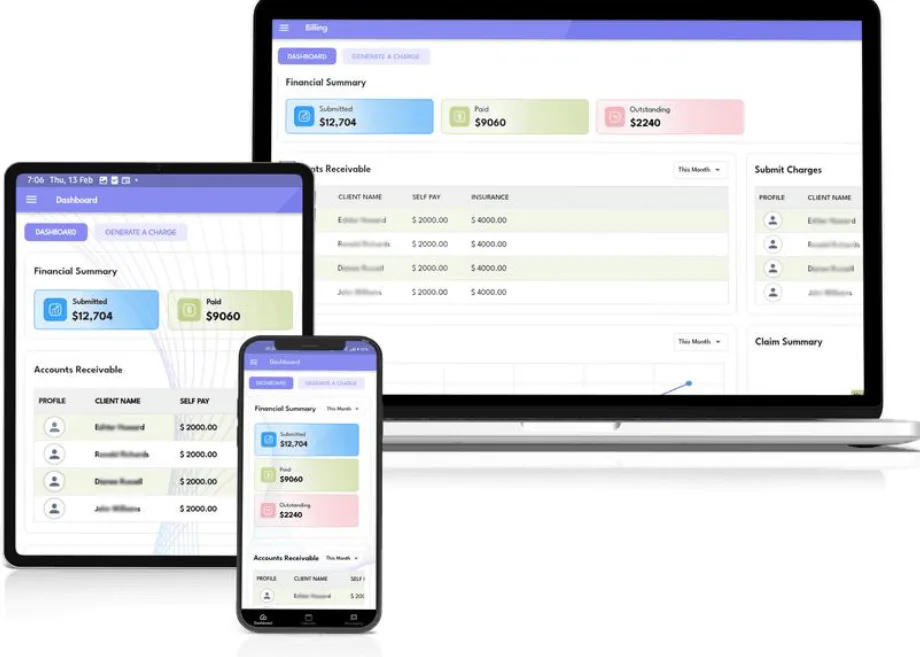
This article breaks down how billing designed with care in mind supports stronger clinical outcomes, especially when paired with the right online ABA therapy software and a reliable web-based ABA therapy system.
Why Billing Impacts Care More Than Most Teams Realize
A common pattern shows up across ABA practices. Sessions are delivered on time. Data collection is solid. Clinical supervision is strong. Still, payments lag. Claims get rejected. Staff hours are questioned weeks later.
Each billing delay creates ripple effects:
- Missed or reduced staff payroll
- Disrupted scheduling for clients
- Administrative burnout
- Pressure to shorten or delay treatment plans
Billing is not a back-office task. It directly influences continuity of care.
The Shift Toward Care-Centered Billing Systems
Modern ABA organizations are moving away from manual spreadsheets and disconnected billing tools. The shift is toward behavior software in USA that ties billing directly to clinical documentation.
This approach rests on one principle: if the care never happened on paper, it never happened to the payer.
Care-centered billing systems are built around:
- Session-based data capture
- Real-time authorization tracking
- Automatic claim readiness checks
- Clear links between treatment goals and billed services
That alignment reduces errors before claims ever leave the system.
How Web-Based ABA Therapy Systems Improve Billing Accuracy
Paper notes and delayed data entry create gaps. Those gaps often turn into denials.
A web-based ABA therapy system changes the workflow. Billing accuracy improves because:
- Session notes are completed immediately
- Units are calculated from actual service time
- Authorization limits are visible before sessions begin
- Missing documentation flags appear early
Clinical staff do not need to think about billing codes. The system handles structure while clinicians focus on care delivery.
Real-World Practice Insight
A mid-sized ABA clinic struggled with denial rates above eighteen percent. Most issues traced back to mismatched session notes and billed units. After switching to an integrated online ABA therapy software platform, denial rates dropped below five percent within three months.
What changed was not staff effort. The workflow changed. Billing was no longer something done after the fact. It became part of the clinical process.
Billing That Supports Compliance Without Slowing Teams Down
Compliance requirements are not getting lighter. Payers expect precision, consistency, and justification. Care-focused billing systems support compliance by design:
- Treatment plans link directly to billed services
- Progress data support medical necessity
- Session documentation follows standardized formats
- Audit trails remain clear and complete
This structure protects both the organization and the clinician. Fewer audits escalate. Fewer corrections drain staff time.
Practical Features That Make a Difference
Not all billing tools are equal. Systems that actually support care usually include:
- Integrated scheduling and billing logic
- Automatic unit validation
- Authorization usage tracking
- Export-ready claims data
- Clear reporting for administrators
Each feature removes friction rather than adding steps.
Why Billing Design Reflects Organizational Values
Billing systems reveal priorities. When tools treat billing as separate from care, teams feel the divide. When billing supports clinical work, morale improves.
Care-first billing design sends a message: accuracy matters, clinician time matters, and client continuity matters. This philosophy shows up in software choices and workflow decisions.
The Foundation of Sustainable Care
Care-focused billing transforms a necessary task. It shifts from a barrier to a seamless support system for everyone involved.
- Billing directly affects care continuity
- Integrated systems reduce errors before claims are submitted
- Web-based platforms improve accuracy and compliance
- Care-centered billing protects clinicians and clients
- Technology choices shape clinical outcomes
Strong care depends on strong systems behind the scenes. Billing does not need to be a barrier. When designed correctly, it becomes a quiet support for better outcomes.
That approach sits at the core of how Operant Systems builds solutions for behavioral healthcare.